
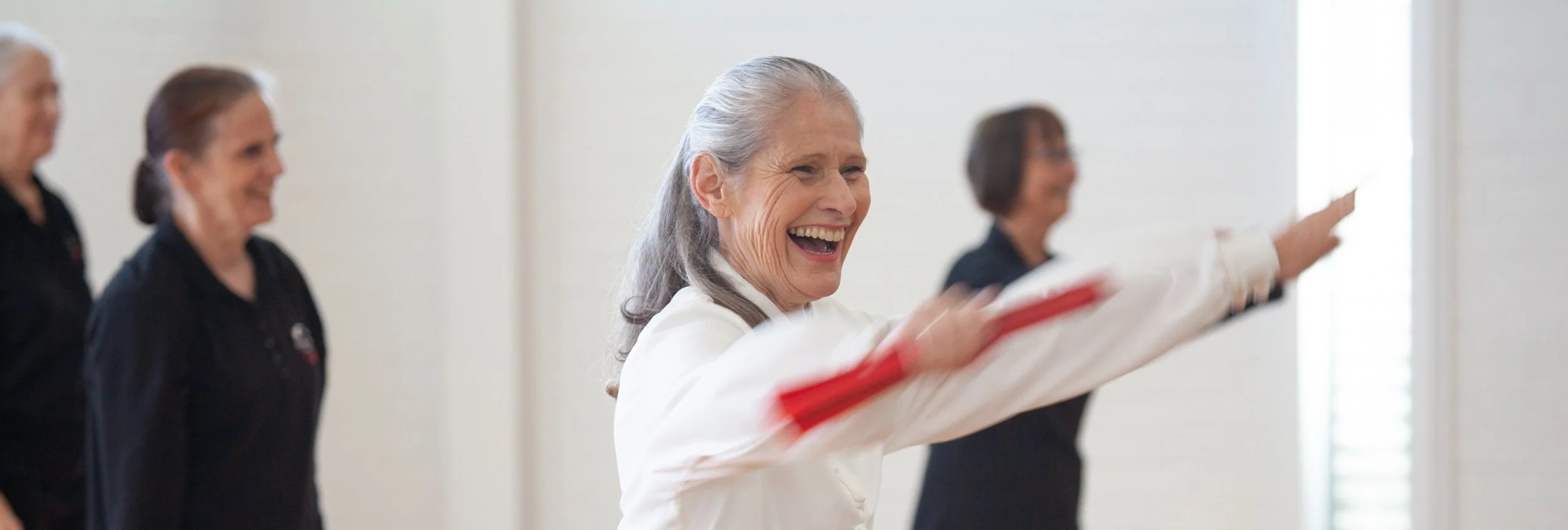
It’s Your Class!
Your classes are yours and yours alone! How you teach, how you organise and how you relate to your students is up to you.
So, some decisions to consider are listed below, with comments from Sifu Jenny:
What are my goals for my students? Do I want them to follow along with me or, do I want to teach them something that they can practice at home? This will largely depend on the students in your class. Some students want to learn. Some just want to come to a class, enjoy it and then go home. From my own experience, most students enjoy learning, but there are few who don’t want the pressure to remember exercises or sequences from week to week. Gently encourage these students with how they’re moving, but try not to put pressure on them to remember from one week to the other.
Should I develop resources for my students? This could include a website with information, or videos so students can practice at home. I have found this invaluable, as it keeps students engaged from one class to the next.
Would I enjoy organising workshops and events for my students? This involves quite a lot of extra time and effort. Considerations include designing the framework and content for a workshop or event, finding a suitable venue, perhaps organising morning/afternoon tea, and of course, getting students to attend! This builds camaraderie and it’s a chance for students to meet in a less formal situation. We have 2 Festivals a year, the first to celebrate WTCQ Day in April, and our November Festival, which showcases our achievements throughout the year.
Do I want to have a social media profile? And, if so, should I use my personal page or start a Page or Group for my students? I have a separate FB page and Instagram account for RMTC as well as a personal page. I don’t post personal information on my RMTC account, but use this to promote Tai Chi, other events and information from other pages and schools. And, whether it’s my personal account or business page, I never post negative or derogatory comments.
How should I organise the timetable? Should I have a Beginner Group, Intermediate and Advanced Group or are my skills not yet ready for that level of teaching? When I first started, I had just Beginners, because that was my standard of teaching. As my skills developed, and as my students’ skills improved, I was able to offer Intermediate, and then Advanced classes. During my early years of teaching Tai Chi, I kept attending classes (travelling more than an hour each way!) with a Master to improve my own form and understanding of tai chi principles.
Should I offer to volunteer at a retirement village or community centre? This is a great way to develop teaching skills and it’s a way to give back to the community. I volunteered at the local aged care facility for a number of years, which was very rewarding. The residents enjoyed their sessions, but the exercises were based on very simple breathing, relaxing, coordination and Qigong movements. They could not remember from week to week, so each session, for them, was always something new!
Should I run classes throughout the year or schedule holidays? This will depend on how many classes you have a week and whether or not you need to take a break from teaching. It will also depend on numbers during the school holidays and whether numbers drop off during this time of year. For a number of years I taught right through the year, without breaking for the school term holidays. However, as my schedule become more full, I felt I needed a break every 9 or 10 weeks. I also found that during the school holidays, many of my students had grandparent duties, or many went away for a holiday. I now take the opportunity to run a Holiday Program, each Monday, Wednesday and Friday of the holidays, where I will teach a short form. The Holiday Programs are very successful.